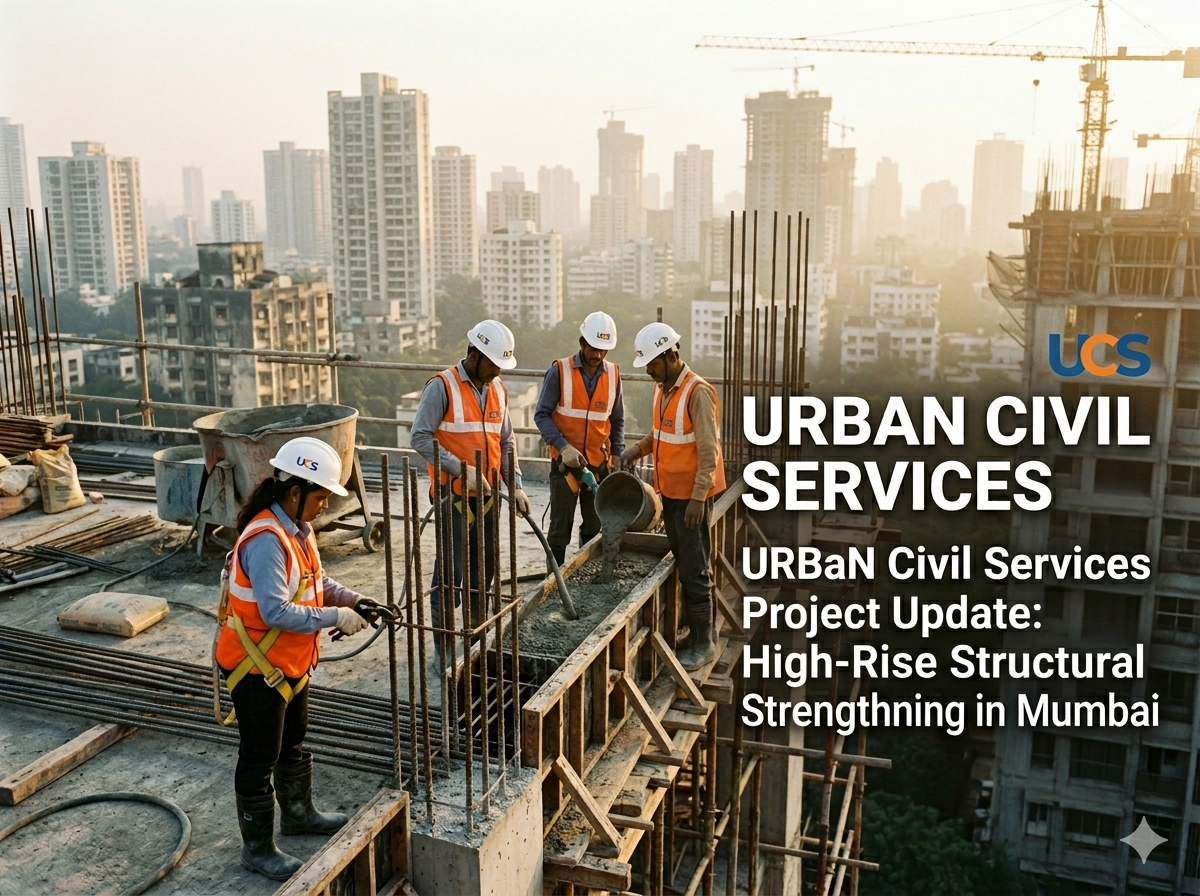
Post-Monsoon Building Damage: What Mumbai Housing Societies Must Fix Now
The Rain Has Stopped: Now Comes the Hidden Damage
As Mumbai's intense monsoon withdraws, managing committees often breathe a sigh of relief. However, the continuous downpours leave behind trapped moisture, micro-cracks, and saturated concrete. Waiting until next monsoon to fix these issues can multiply your repair bills threefold.
Key Areas to Inspect Immediately:
- Terrace Slabs & Parapet Walls: Check for ponding marks and damp patches on top-floor ceilings, which indicate waterproofing membrane failure.
- External RCC Columns & Beams: Look for rust stains or bulging plaster (spalling), which signify that internal reinforcement steel is corroding.
- Rainwater Down-take Pipes (RWP): Joint leaks and overflowing lines during heavy rains weaken exterior wall plaster.
At Urban Civil Services, our post-monsoon forensic health checks combine visual audits with moisture-meter testing to detect problems before they compromise your building's structural integrity.
Proactive Solutions We Offer:
- Polymer Mortar Patching: Sealing exterior cracks with high-grade elastomeric compounds.
- Pressure Grouting: Eliminating internal dampness corridors through specialized injection grouting.
- Turnkey Restoration: Comprehensive repairs backed by our 10-Year Warranty.
Frequently Asked Questions (FAQ)
Dry weather allows trapped moisture to evaporate completely, ensuring that waterproofing membranes and repair mortars bond securely without bubbling.
Generally, exterior walls and structural elements are the collective responsibility of the housing society managing committee.
Yes. Unsealed hairline cracks allow rainwater and saline air to reach internal steel reusables, leading to internal rusting and concrete spalling.
A standard visual and technical audit for a mid-sized residential housing society takes 2 to 3 working days.
Yes, all major structural repairs and waterproofing projects executed by Urban Civil Services come with a comprehensive warranty.