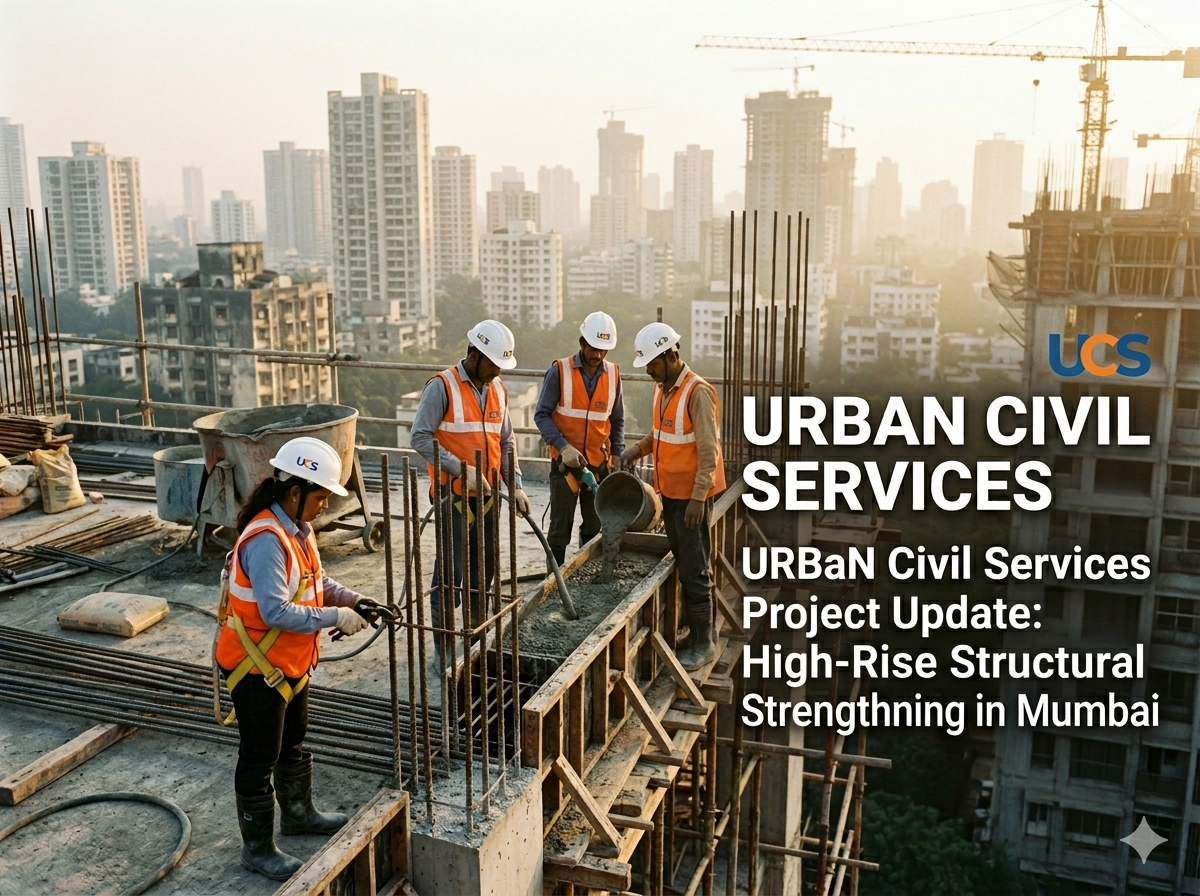
10 Critical Construction Hazards and Prevention in High-Rise Repairs
Safety First: Managing Risks in Occupied Buildings
Structural repairs in Mumbai often happen while residents are still living in the building. This creates a high-risk environment where 'Safety' is not just for the workers, but also for the families and children walking below the scaffolding. In 2026, Urban Civil Services follows a strict Zero-Harm policy.
Top 5 Hazards in Mumbai Repair Sites:
- Falling Objects: In high-rise repairs, a single dropped hammer can be fatal. We mandate double-layered safety nets (green mesh + heavy-duty nylon) around the entire building perimeter.
- Scaffolding Failure: Traditional bamboo scaffolding is being replaced by H-Frame Cup-lock steel systems. We perform weekly stability checks on all 'anchors' fixed into the building's RCC frame.
- Electrical Short Circuits: Temporary wiring for breakers and mixers often leads to fire hazards. We use ELCBs (Earth Leakage Circuit Breakers) for every temporary connection.
- Dust & Respiratory Issues: Mechanical breaking of concrete creates silica dust. We use water-curtains and dust-extractors to ensure the air quality for residents remains safe.
- Fall from Heights: Any worker above 6 feet must use a Full-Body Safety Harness anchored to a lifeline independent of the scaffolding.
Our 2026 Safety Protocol
Before any jacketing or waterproofing work begins, we conduct a 'Toolbox Talk' to identify risks. For societies, we provide 'Safe Walkway' tunnels made of GI sheets to ensure residents can enter and exit their wings without fear of falling debris.
Frequently Asked Questions (FAQ)
The contractor should carry a Workmen Compensation (WC) policy and a Third-Party Liability policy to protect the Society against any accidental damages.
Nets are a secondary defense; the primary defense is 'Toe-boards' on scaffolding and lanyards for all hand tools.