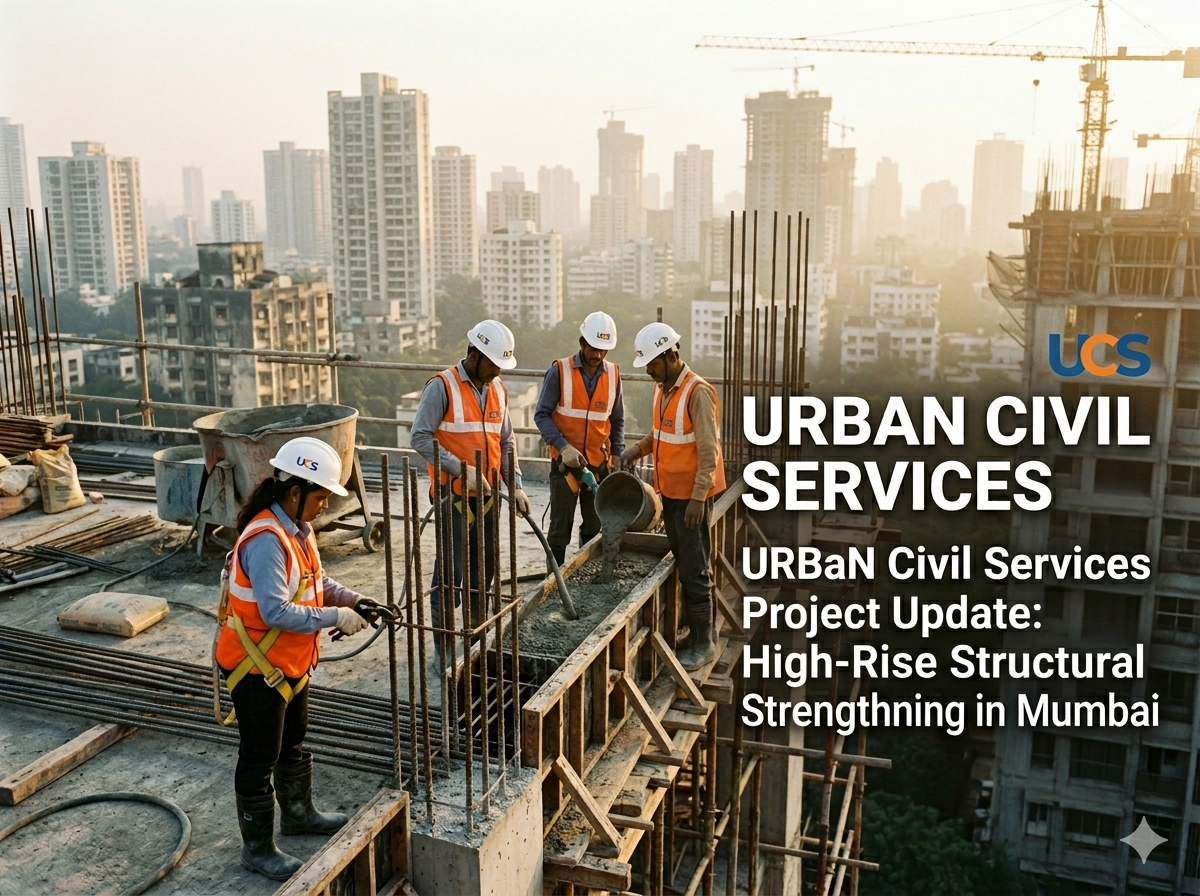
Understanding C2-B Classification: 'Repair Without Vacation' for Mumbai Societies
The 'Safe Zone' of Structural Repairs
When the BMC classifies a building as C2-B, it means: "Structural repairs are required, but residents do not need to vacate the premises." This is the most critical stage for a Housing Society. If you act now, you save the building. If you wait 24 months, the building will likely degrade to C1 (Dangerous/Demolish).
What counts as a C2-B Repair?
- Localized Column Jacketing: Strengthening specific columns that show signs of distress.
- Slab Patch Work: Repairing spalled concrete in individual flats or common passages using Polymer Modified Mortar (PMM).
- External Plastering: Replacing hollow or cracked plaster to stop water ingress into the RCC.
- Waterproofing: Solving terrace or toilet leakages that are the root cause of the structural damage.
The Timeline of a C2-B Notice:
Once the audit is submitted, the BMC typically issues a notice under Section 354 or Section 353B, giving the society 3 to 6 months to complete the repairs.
- Work Order: The society appoints a contractor like Urban Civil Services.
- Execution: Repairs are carried out with external scaffolding.
- Completion: The auditor issues a 'Repair Completion Certificate' and a fresh 'Stability Certificate.'
- De-listing: The BMC removes the building from the 'Dilapidated' list in their records.
Frequently Asked Questions (FAQ)
Yes. C2-A requires partial vacation and more intensive structural work. C2-B is minor and residents can stay in their homes.
Only if the society fails to start repairs within the timeframe mentioned in the notice.
Temporarily, yes. However, once the 'Completion Certificate' is filed, the value usually recovers as the building is now officially 'Safe.'
Yes, but it gives you more 'bargaining time' than a C1 status where you are forced to move out immediately.