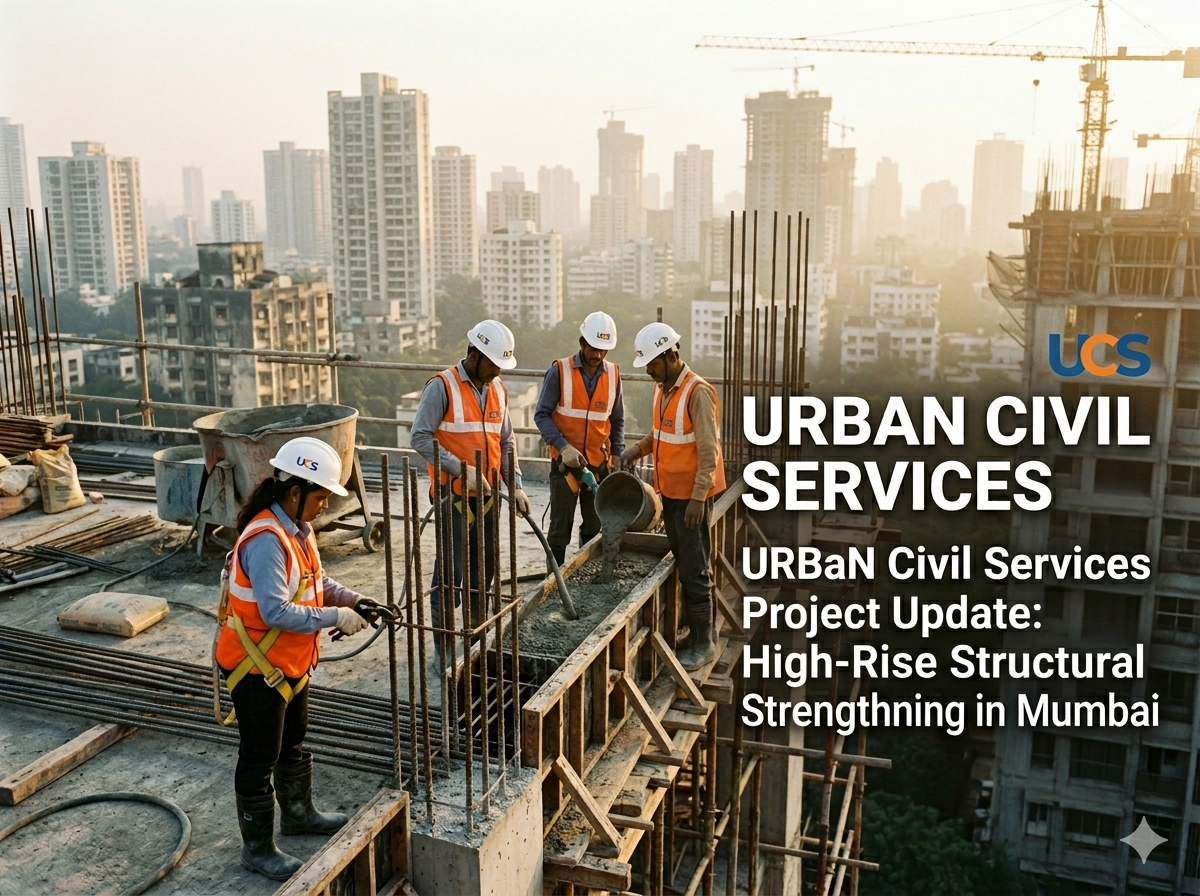
Navigating BMC C2A Category: Major Repairs With Temporary Evacuation
The Middle Ground: Major Structural Overhauls
When a structural audit report categorizes a building under C2A, it means the structure has significant distress but is not beyond saving like a C1 building. However, executing the required repairs requires partial or temporary evacuation of dangerous wings or portions.
Key Characteristics of C2A Structures:
- Isolated Structural Failures: Specific columns, beams, or cantilever balconies have lost structural integrity and require heavy retrofitting.
- Compromised Load Paths: Portions of the building cannot safely bear heavy construction loads while active repairs are underway.
Urban Civil Services specializes in executing complex C2A structural restorations safely, ensuring that buildings are brought back to prime health without resorting to total demolition.
Execution Steps for C2A Compliance:
- Propping and Shoring: Installing heavy-duty steel props to support slabs and beams before chipping damaged concrete.
- Column Jacketing & Micro-Concreting: Strengthening distressed structural members using high-strength polymer mortars.
- Submission of Completion Form-6: Once repairs are finished, our registered engineers submit the final stability certificate to the BMC ward office.
Frequently Asked Questions (FAQ)
Not necessarily. Only residents whose flats or wings fall directly under the designated repair zone may need temporary relocation.
This is typically arranged internally between the society and members, or covered via society repair sinking funds.
Depending on the scale of column jacketing and beam strengthening, C2A projects generally take 4 to 8 months.
Yes. Delaying C2A repairs through successive monsoons will cause further steel corrosion, converting a repairable building into an irrecoverable C1 structure.
Yes, we manage all ward-office liaisoning and final stability certificate submissions upon project completion.