From Audit to Approval: The 7-Step Building Repair Roadmap for 2026
Navigating the Repair Journey in Mumbai
Once a structural audit is completed, many societies feel overwhelmed by the next steps. In 2026, the process is highly regulated to ensure safety and financial transparency. At Urban Civil Services, we help committees navigate this 7-step roadmap:
The Roadmap:
- The Audit & Categorization: Your BMC-registered auditor issues a report (Proforma B) categorizing the building (C2-A, C2-B, or C3).
- General Body Meeting (GBM): The society must present the audit findings to members and pass a resolution to initiate repairs and allocate funds.
- Tendering & PMC Appointment: For major repairs, appointing a Project Management Consultant (PMC) is recommended to draft a 'Bill of Quantities' (BOQ) and vet contractor bids.
- Contractor Selection: Evaluate contractors based on their experience with BMC-compliant structural work, safety protocols, and equipment.
- Liaisoning & Permissions: Submit the Form 6 and intimation letters to the local BMC Ward Office before starting work.
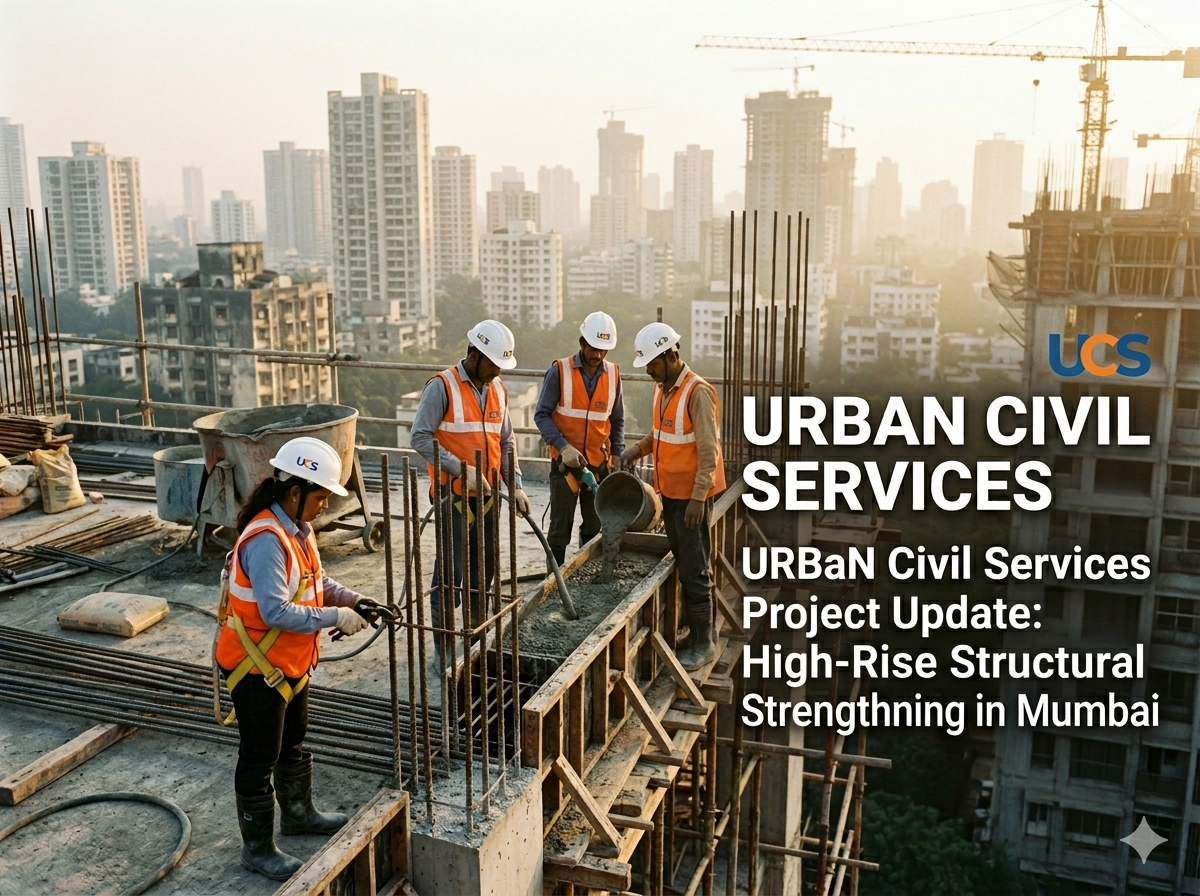
- Execution & Supervision: Repairs like column jacketing or micro-concreting are carried out under the supervision of the Structural Engineer.
- Final Stability Certificate: Upon completion, the auditor inspects the work and issues the final Stability Certificate for society records and BMC submission.
Frequently Asked Questions (FAQ)
Depending on the building size, the roadmap from audit to completion usually takes 6 to 12 months.
For small repairs (C3), it is possible. For structural strengthening (C2-A/C2-B), a PMC ensures the contractor follows the correct technical specifications.
Delay in member consensus or fund collection is the most frequent hurdle for Mumbai societies.
No, the original auditor provides a 'Stability Certificate' based on the repairs performed.